The Jockey Club School of Public Health and Primary Care (JCSPHPC) at The Chinese University of Hong Kong (CUHK) is proud to have provided training and mentorship for leading public health researchers, practitioners, and policy professionals in Bangladesh and Sri Lanka as a host institution in Phase 2 of the Fleming Fund Fellowships, strengthening global efforts to combat the pressing challenge of antimicrobial resistance (AMR).
Named after Sir Alexander Fleming, the discoverer of penicillin and Nobel Prize laureate, the Fleming Fund Fellowship is a flagship global health initiative dedicated to combating AMR—widely recognised as one of the greatest threats to modern healthcare. Since its launch in 2018 through funding from the UK government, the programme has supported more than 180 scientists, public health leaders, and policy experts from 25 countries across Africa and Asia, helping to strengthen surveillance systems, inform policy development, and build sustainable national responses to drug-resistant infections, particularly in low-and middle-income countries.
In 2024, JCSPHPC joined a distinguished group of host institutions, including the London School of Hygiene & Tropical Medicine (UK), the Peter Doherty Institute for Infection and Immunity (Australia), and Fondation Mérieux (France). As the Phase 2 programme was completed in March 2026, JCSPHPC had delivered comprehensive training and mentorship to 20 fellows from Bangladesh and Sri Lanka, supporting their efforts to enhance AMR surveillance and evidence-based policymaking in their home countries.


Led by Professor Hein Min Tun, Associate Professor and Associate Director (Global Engagement) of JCSPHPC, the 17-month programme combined structured training with ongoing consultative support tailored to the needs of individual fellows. Each fellow was matched with a dedicated mentor, enabling timely guidance on technical challenges and research implementation. The programme promoted a One Health approach to AMR surveillance, integrating data from human health, animal health, and environmental sources to generate a more comprehensive understanding of drug-resistance pathways and support informed public health decision-making.
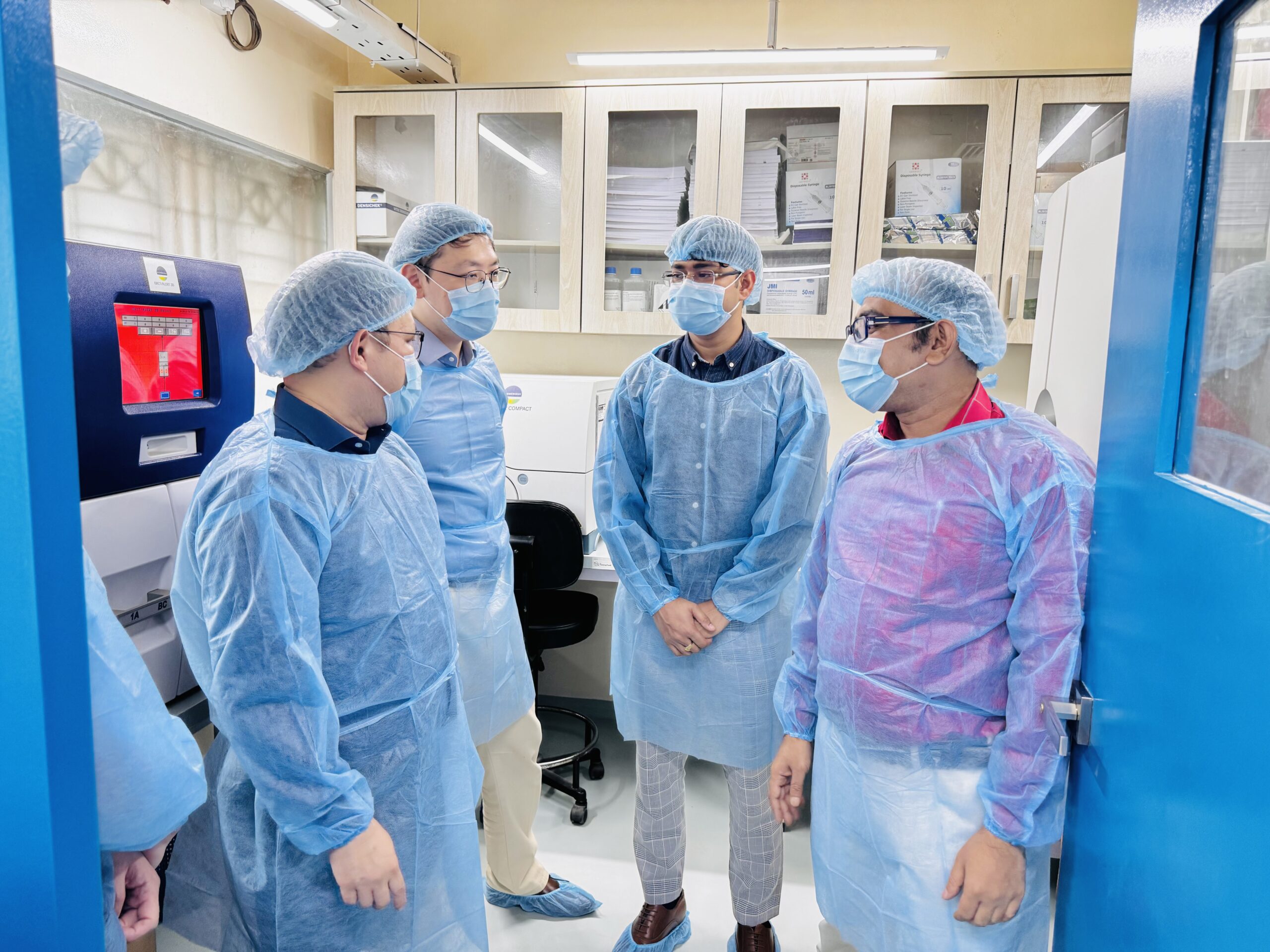
The Fellowship experience was further strengthened through reciprocal visits between mentors and fellows. JCSPHPC faculty members visited participating institutions in Bangladesh and Sri Lanka in 2025 to deepen partnerships, align Fellowship activities with national priorities, and gain first-hand insights into local AMR challenges. Fellows also visited Hong Kong for intensive training workshops and professional exchanges, enhancing their understanding of surveillance systems while engaging with local experts and stakeholders working in the field of AMR.
The programme’s impact has extended to the global level. Together with fellows from Bangladesh and Sri Lanka, CUHK representatives participated in ESCMID Global 2025, one of the world’s premier forums for infectious diseases and clinical microbiology. The congress provided an international platform for fellows to present their work, exchange knowledge with global experts, and contribute to discussions on emerging AMR challenges and solutions.


As the host institution, JCSPHPC extends its sincere appreciation to the programme’s dedicated mentors, including Prof. Chris Mok, Prof. Christopher Lai, Prof. Kin On Kwok, Dr. Paul Poon, Prof. Ye Peng, Dr. Emily Man, Dr. Sam Zhu, and Dr. Subhankar Mukhopadhyay, whose expertise and commitment have been instrumental to the programme’s success.
Looking ahead, JCSPHPC remains committed to advancing global health through international partnerships, interdisciplinary research, and capacity-building initiatives. By fostering the next generation of public health leaders and strengthening collaborative responses to AMR, the School continues to contribute to a healthier and more resilient future for communities around the world.